10% OFF FOR NEW CUSTOMERS – YOUR PATH TO A HEALTHY LIVER STARTS HERE
Inner Banner

Psoriasis and Fatty Liver: Why They Often Go Together, and What You Can Do About Both

  • Home
  • Psoriasis and Fatty Liver: Why They Often Go Together, and What You Can Do About Both
Psoriasis and Fatty Liver: Why They Often Go Together, and What You Can Do About Both
Articles
Psoriasis and Fatty Liver: Why They Often Go Together, and What You Can Do About Both

If you live with psoriasis, you probably think of it as a skin condition. The red, scaly patches are the part you can see. But doctors now know psoriasis is much more than skin deep. It is an inflammatory disease that affects the whole body, and one of the organs it seems to have a close relationship with is the liver.

People with psoriasis are much more likely than other people to have fatty liver disease. The good news is that many of the same everyday habits that help calm psoriasis can also help protect your liver. Here is what you need to know.

What is psoriasis?

Psoriasis is a long-term (chronic) condition in which the immune system becomes overactive. This speeds up the growth of skin cells, causing thick, scaly, often itchy patches, usually on the elbows, knees, scalp, and lower back. More than 7 million adults in the United States have psoriasis. Some also develop psoriatic arthritis, which causes joint pain and swelling.

Psoriasis tends to come and go in flare-ups, which can be triggered by stress, infections, certain medicines, smoking, alcohol, and cold, dry weather.

What is fatty liver disease?

Fatty liver disease happens when too much fat builds up inside the liver. For years it was called non-alcoholic fatty liver disease, or NAFLD. In 2023, experts gave it a new name: metabolic dysfunction-associated steatotic liver disease, or MASLD. (“Steatotic” simply means fatty.) The new name reflects what usually drives it: problems with how the body handles sugar and fat, such as excess weight around the waist, type 2 diabetes or prediabetes, high blood pressure, and high triglycerides.

MASLD is very common. Roughly one in four to one in three American adults is thought to have it, and most do not know. It usually causes no symptoms in its early stages. In some people, the fat triggers inflammation and damage, a more serious form called MASH (previously known as NASH). Over many years, MASH can lead to scarring (fibrosis), cirrhosis, and liver cancer. Fatty liver is also linked to a higher risk of heart disease.

How are psoriasis and fatty liver linked?

Studies from around the world have found that people with psoriasis are about twice as likely to have fatty liver disease as people without it. The risk appears to be higher in people with more severe psoriasis and in those with psoriatic arthritis. People with both conditions may also be more likely to have the more advanced, damaging forms of liver disease.

Researchers are still working out exactly why the two conditions are connected, but several factors seem to play a part:

  • Shared inflammation. In psoriasis, the immune system releases chemical messengers that drive inflammation. These same messengers circulate throughout the body and can encourage fat build-up and inflammation in the liver. In turn, an inflamed liver may add to the body’s overall inflammation, creating a two-way loop.
  • Belly fat. Fat stored deep around the abdomen (visceral fat) is not just stored energy. It acts like an active organ, releasing inflammatory substances. People with psoriasis are more likely to carry extra weight, and this type of fat feeds both conditions.
  • Insulin resistance. When the body stops responding well to insulin, blood sugar rises and the liver stores more fat. Insulin resistance is more common in people with psoriasis and is a key driver of fatty liver.
  • Metabolic syndrome. Psoriasis is strongly linked to metabolic syndrome, a cluster of problems that includes a large waistline, high blood pressure, high blood sugar, and unhealthy cholesterol levels. Metabolic syndrome is also the main risk factor for fatty liver.
  • The gut connection. Scientists are exploring the “gut-liver-skin axis,” the idea that changes in the bacteria living in your gut may influence inflammation in both the liver and the skin.

Why this matters for your treatment

The liver link is important for another reason: some medicines used to treat psoriasis can affect the liver. Methotrexate, an older but widely used treatment, can cause liver damage, and the risk is higher in people who already have fatty liver, diabetes, obesity, or who drink alcohol. Some other psoriasis treatments also require liver monitoring.

This does not mean you should stop any medicine. It means your dermatologist and primary care doctor should know about your liver health when choosing the treatment that is safest and most effective for you. Many newer psoriasis treatments are considered gentler on the liver.
Diet strategies that can help both conditions

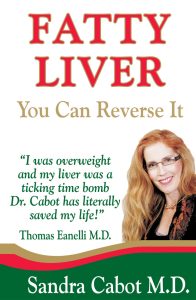
  • Base your diet on foods that don’t have an ingredients list. This way of eating is built around vegetables, fruits, red meat, seafood, eggs, poultry, nuts, seeds and olive oil. It is the eating pattern most often recommended for fatty liver, and studies have linked closer adherence to it with less severe psoriasis. There is an easy to follow meal plan in my book Fatty Liver: You Can Reverse It.Fatty Liver - You Can Reverse It Book
  • Cut back on added sugars and alcohol. Soda, sweet tea, energy drinks, and fruit drinks are major sources of fructose, a sugar the liver readily turns into fat. Swapping them for water, sparkling water, or unsweetened tea is one of the simplest changes you can make. Berberine is a plant extract that helps to reverse insulin resistance. It improves blood sugar and blood fat and enables weight loss from the torso.
  • Limit ultra-processed foods. Fast food, chips, packaged baked goods, and processed meats tend to be high in refined starch, added sugar, salt, and unhealthy fats. Processed foods significantly increase inflammation in your body. One of the ways they do this is by encouraging the growth of harmful gut bugs. BactoClear capsules are excellent for killing off overgrowth of bad bacteria, yeast and Candida in the gut.
  • Eat fish regularly. Oily fish such as salmon, sardines, trout, and mackerel contain omega-3 fats, which have anti-inflammatory effects. Aim for about two servings a week.
  • Fill up on fiber. Vegetables, fruit, beans, and nuts provide fiber and antioxidants. Try to make half your plate vegetables at most meals.
  • Coffee may be a friend to your liver. Several studies suggest regular coffee drinking is linked to a lower risk of liver scarring. If you already enjoy it, there is no need to stop. Just go easy on the sugar and sweetened creamers.

My liver tonic Livatone Plus contains ingredients scientifically formulated to improve the liver’s ability to burn fat and carry out detoxification.

Lifestyle strategies that can help both conditions

  • Aim for healthy weight loss if you carry extra weight. This may be the most powerful step of all. Losing even 5% of your body weight can reduce liver fat, and losing 7% to 10% can reduce liver inflammation and may even improve scarring. Clinical trials have also shown that weight loss through diet and exercise can reduce the severity of psoriasis and may help psoriasis treatments work better.
  • Move your body most days. Regular physical activity reduces liver fat and improves insulin sensitivity, even if your weight does not change much. Aim for at least 150 minutes a week of moderate activity, such as brisk walking, cycling, or swimming, plus some muscle-strengthening exercise twice a week. If that sounds like a lot, start with 10-minute walks and build up.
  • Manage stress. Stress is a well-known psoriasis trigger. Walking, yoga, deep breathing, talking with a counselor, or joining a support group can all help. Magnesium is a calming and relaxing mineral. It helps improve sleep quality and duration as well.
  • Prioritize sleep. Poor or short sleep is linked to weight gain, insulin resistance, and higher inflammation. Most adults need seven or more hours a night.


Psoriasis and fatty liver disease share common roots: inflammation, belly fat, and problems with how the body handles sugar. That connection can feel like bad news, but it also means that healthy changes work on both fronts at once. Eating more whole foods, cutting back on sugar and alcohol, moving more, and losing a modest amount of weight can help your skin and your liver at the same time.

For more information about psoriasis and all autoimmune conditions see the book Healing Autoimmune Disease: A plan to reduce inflammation and help your immune system.

The above statements have not been evaluated by the FDA and are not intended to diagnose, treat or cure any disease.

tworowcta-1
Need Help?
1-888-75-LIVER Monday to Friday, 9:00 am to 4:00 pm MST
tworowcta-2
Satisfaction Guaranteed
If it’s faulty or wrongly described, we’ll replace it.
m1 m2 purchase-bg
Get 10% off your first purchase

When you submit your email, you agree to join our mailing list and receive helpful updates, special offers, and product news.

Get Offer