


Should You Worry If You Find A Breast Lump?
- Home
- Should You Worry If You Find A Breast Lump?

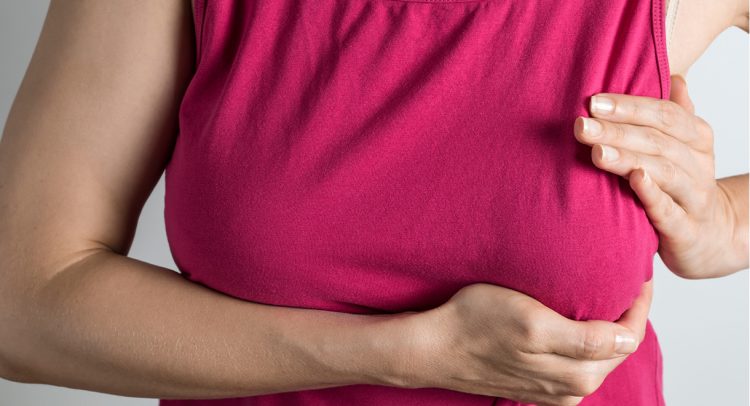
I encourage all women to perform self breast examinations regularly. It is very important to be familiar with your own breasts; knowing exactly how they appear and how they feel. This way, you can detect subtle changes at an early stage, and then see your doctor for further investigations if necessary.
A large percentage of the patients I’ve seen with breast cancer detected a lump or other abnormality themselves. They were able to notice a subtle change in their breast, which enabled a tumor to be detected at a very early and treatable stage.
Please read this simple explanation of how a breast self examination should be performed.
Women who menstruate perform a breast self exam after their menstruation has ended. Post menopausal women can do it any time of the month.
Of course, breast self examination cannot detect all tumors, because some are located deep within the breast, and also some types of tumors do not form lumps. But what if you do find a lump?
Nine out of ten breast lumps are not cancerous, that’s the good news. If you or your doctor has detected a lump in your breast during a physical exam, the lump will be one of the following:
This is a benign (non-cancerous) fluid filled sac of tissue. A cyst will feel smooth and squishy and if you press on it, it will move like a water filled balloon. A cyst can move around and it will typically change size during the menstrual cycle. Cysts can be found close to the surface of the breast or deep down, close to the chest wall. Cysts typically diminish in size or disappear altogether immediately after menstrual bleeding, therefore when conducting a breast self exam it is best to do it a few days after your menstruation has finished. Breast cysts are common in menstruating women of all ages, but are rare in post-menopausal women. Your doctor can aspirate the cyst, that is remove the fluid it contains with a syringe, which deflates the cyst.
This is a benign cyst that is made of fibrous and glandular tissue. This cyst feels like a round hard lump. It moves around during a breast physical examination. These lumps are usually found near the surface of the breast, therefore can be easily felt. To confirm that the lump is a harmless fibroadenoma, a doctor can perform a biopsy to analyse what type of cells it contains. Fibroadenomas are common in teenagers and women in their 20s and 30s; they are uncommon in post menopausal women. Women with fibroadenomas in their breasts are at increased risk of developing breast cancer. Deficiencies of vitamin D, selenium and iodine may raise the risk of forming fibroadenomas.
Pseudo means false. These are benign lumps made of scar tissue, or fatty tissue, hardened silicone (in women with breast implants), or may be due to a rib bone pressing into the breast tissue and compressing it. Pseudo-lumps may move around during a physical examination or remain fixed; they do not change size during a menstrual cycle. A mammogram, ultrasound or biopsy can identify a pseudo-lump.
This is a malignant lump made of abnormal breast cells. A malignant lump usually has an irregular lump shape, rather than being perfectly round. It usually feels very hard and can occur near the surface of the breast, deeper inside or in the armpit. An ultrasound and mammogram will be performed to identify the lump, but a biopsy provides the clearest view of the kind of cells the lump contains.
A number of different cell types in the breast can change form and become cancerous.
The most common breast cancer types include:
Breast calcifications are tiny calcium deposits in the breast tissue that appear as white spots on a mammogram. Breast calcifications are common, and most women have at least one. In most cases they are not cancerous; however in some cases they may indicate breast cancer.
There are two main types of breast calcifications:
The most common causes of non-cancerous breast calcifications are:
For more information about breast cancer, see our book The Breast Cancer Prevention Guide and watch our video where naturopath Margaret Jasinska discusses how to take care of your breasts and reduce the risk of breast cancer.
To protect the breasts from cysts, lower the potential for breast cancer and reduce the incidence of breast calcifications ensure you have Breast Health Capsules and Super Vitamin K daily.
The above statements have not been evaluated by the FDA and are not intended to diagnose, treat or cure any disease.


When you submit your email, you agree to join our mailing list and receive helpful updates, special offers, and product news.