


Sleep, Melatonin and Cancer
- Home
- Sleep, Melatonin and Cancer


We all depend upon adequate amounts of sleep to keep us healthy and cope with the stresses of everyday life. Good sleep impacts everything including our mood, energy levels, as well as progression of a disease. Clearly, getting a good night’s sleep is profoundly important if you are suffering from cancer.
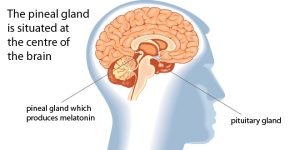 When your body is undergoing stress and lack of sleep, your sensitive hormonal system can be easily thrown out of balance. A number of hormones the body produces serve as powerful regulators, cleansers and neutralisers of other hormones as well as free radicals in the body. One of those hormones is called melatonin and is produced by the pineal gland, located inside your brain. The pineal is extremely sensitive and receives its cues to either secrete melatonin in response to darkness (night time), or to suppress melatonin in response to light (day time). We experience this as our biological clock or circadian rhythms – our 24 hour sleep/wake cycle. Our circadian rhythms are also responsible for certain physiological processes such as adjusting to the seasons, and timing of the release of hormones during a women’s menstrual cycle.
When our sleep is chronically disrupted, healthy levels of melatonin become compromised. This can become extremely problematic as melatonin exerts strong anti-tumour activity.
One group of chronically sleep deprived, with disrupted circadian rhythms, are the long-term night shift workers. In 2007, the World Health Organisation classified night shift work as a “group 2A carcinogen” – which means exposure poses a probable risk of cancer. Amongst the group 2A carcinogens are substances such as diesel exhaust fumes, lead compounds and ultraviolet radiation A, B, and C, to name just a few. (1)
So as you can appreciate, there are significant benefits for keeping your melatonin levels at an optimal level.
Cancer patients often experience a great deal of physical and emotional distress. Feelings of anxiety and depression are very common as well as a real battle to get good restorative sleep. Meditation can be a very useful instrument to help with these symptoms, as mentioned earlier. But you may also need to increase your melatonin levels via supplemental form to improve your quality of life, and even potentially inhibit further growth and spread of tumours.
Scientific studies have shown melatonin supplements can help people fall asleep faster and stay asleep, experiencing less restlessness and even preventing day time fatigue. Only a small dose is usually required as taking higher doses can sometimes have the opposite effect making you more wakeful.
If you have any queries about melatonin or an appropriate dose for you, speak to your family doctor. You can also contact us for friendly advice.


When you submit your email, you agree to join our mailing list and receive helpful updates, special offers, and product news.