


Taurine: The Miracle Amino Acid
- Home
- Taurine: The Miracle Amino Acid

By Carol Vella, Bachelor of Nutrition

Taurine is one of the most abundant amino acids found in the body. It is concentrated in areas such as the brain, muscle tissue, heart and muscle cells, retina and many other tissues in the body. (Ripps, 2012). Taurine is a conditionally essential amino acid. It tends to become more depleted during periods of stress or illness. It is helpful to ensure adequate amounts of taurine for optimal health. Supplemental taurine may aid in the management of:
Recent studies have shown significant benefits for multiple systems in the body with the introduction of taurine including enhanced vascular health, regulating blood pressure and positive effects on the cardiovascular system. In fact, in Japan taurine has been approved for the treatment of congestive heart failure. (Schaffer, 2018)
Before you consider Botox or dermal fillers to plump up your skin, taurine should be considered as a natural alternative. Studies have shown that taurine is proven to have specific antioxidant properties which provides anti-aging factors. Taurine reduces oxidative stress and preserves mitochondrial function. This delays the progress of aging. (Santulli et al., 2023)
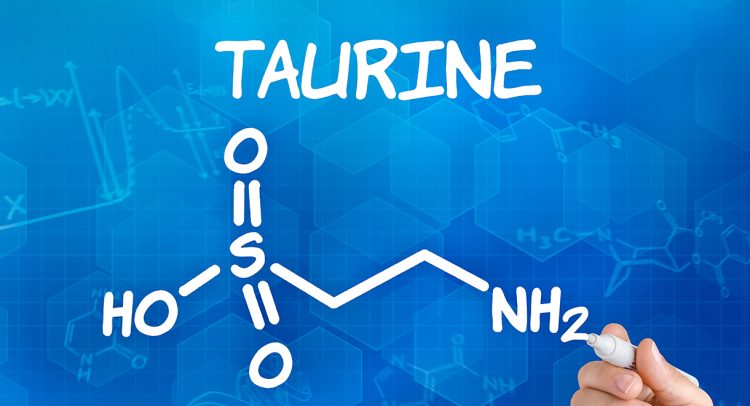
Taurine shares a structure similar to GABA (gamma-aminobutyric acid) and glycine. Because of this, it exerts a calming effect on the body through its actions on the brain. GABA and glycine are neurotransmitters which produce feelings of relaxation. It is through this action where the benefits are produced with conditions such as stress, anxiety, and insomnia. (Ripps, 2012). Studies also demonstrate that supplemental taurine has far reaching benefits on the entire central nervous system. This provides a form of protection with women entering the stages of perimenopause where they may feel emotionally fragmented due to the recalibration process that the brain must go through with the ups and downs of hormonal swings during this time. (Gordon et al., 2015)
Bile acid production is supported through the use of taurine, and this helps to encourage a great amount of bile acids which prevents gallstones from occurring. (Baker et al., 2017)
Through this same mechanism of encouraging the production of bile acids, taurine assists the removal of excess estrogens through the bowel and the liver. The healthy detoxification of estrogen assists with the symptoms of estrogen dominance that can predominate in the perimenopause transition women enter which can be as along as up to ten years before menopause occurs. (Baker, 2017). Taurine is also important for women because the female hormone estrogen reduces the amount of taurine that is synthesised in the body. (Ritz et al., 2002).
Animal foods provide the richest sources of taurine, such as beef, chicken, and dairy foods. There is no taurine found in plant foods, so vegetarians and vegans should consider supplemental taurine to ensure they don’t become deficient in this amino acid. Taurine is also found in Magnesium Ultra Potent Powder. This supplies a rich source of taurine, combined with four types of magnesium.

References:
https://www.ncbi.nlm.nih.gov/pmc/articles/PMC10574552/
Santulli G, Kansakar U, Varzideh F, Mone P, Jankauskas SS, Lombardi A. Functional Role of Taurine in Aging and Cardiovascular Health: An Updated Overview. Nutrients. 2023 Sep 30;15(19):4236. doi: 10.3390/nu15194236. PMID: 37836520; PMCID: PMC10574552.
https://pubmed.ncbi.nlm.nih.gov/12515322/
Ritz MF, Schmidt P, Mendelowitsch A. 17beta-estradiol effect on the extracellular concentration of amino acids in the glutamate excitotoxicity model in the rat. Neurochem Res. 2002 Dec;27(12):1677-83. doi: 10.1023/a:1021695213099. PMID: 12515322.
https://www.ncbi.nlm.nih.gov/pmc/articles/PMC5933890/
Schaffer S, Kim HW. Effects and Mechanisms of Taurine as a Therapeutic Agent. Biomol Ther (Seoul). 2018 May 1;26(3):225-241. doi: 10.4062/biomolther.2017.251. PMID: 29631391; PMCID: PMC5933890.
https://pubmed.ncbi.nlm.nih.gov/23170060/
Ripps H, Shen W. Review: taurine: a “very essential” amino acid. Mol Vis. 2012;18:2673-86. Epub 2012 Nov 12. PMID: 23170060; PMCID: PMC3501277.
https://www.ncbi.nlm.nih.gov/pmc/articles/PMC4513660/
Gordon JL, Girdler SS, Meltzer-Brody SE, Stika CS, Thurston RC, Clark CT, Prairie BA, Moses-Kolko E, Joffe H, Wisner KL. Ovarian hormone fluctuation, neurosteroids, and HPA axis dysregulation in perimenopausal depression: a novel heuristic model. Am J Psychiatry. 2015 Mar 1;172(3):227-36. doi: 10.1176/appi.ajp.2014.14070918. Epub 2015 Jan 13. PMID: 25585035; PMCID: PMC4513660.
https://pubmed.ncbi.nlm.nih.gov/28778332/
Baker JM, Al-Nakkash L, Herbst-Kralovetz MM. Estrogen-gut microbiome axis: Physiological and clinical implications. Maturitas. 2017 Sep;103:45-53. doi: 10.1016/j.maturitas.2017.06.025. Epub 2017 Jun 23. PMID: 28778332.
The above statements have not been evaluated by the FDA and are not intended to diagnose, treat or cure any disease.


When you submit your email, you agree to join our mailing list and receive helpful updates, special offers, and product news.