


Why Is Gout Becoming So Prevalent?
- Home
- Why Is Gout Becoming So Prevalent?

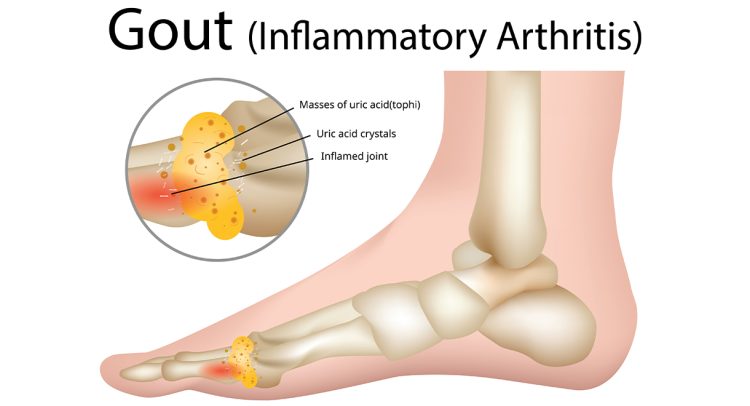
Did you know that more and more people around the world are being diagnosed with gout? Gout is an extremely painful type of arthritis and you probably know someone who has it. A recent study published in the journal Annuals of Rheumatic Diseases found that 1 in 40 people in the UK now have gout. The rates are very similar in the USA and other western nations.
Gout is a form of arthritis that occurs when uric acid builds up in excessively high levels in the body. Sodium urate crystals deposit in the joints and can cause severe pain, swelling and redness. The joint in the big toe is most commonly affected, but gout can also occur in the heel, ankle, knee or other parts of the body.
Gout was once quite rare and it was referred to as a disease of overindulgence. The main risk factors for developing gout are being overweight, having type 2 diabetes, insulin resistance and also having an unhealthy diet. Now that obesity and type 2 diabetes are so prevalent, it’s no wonder rates of gout have skyrocketed.
In past decades, the advice for patients suffering from gout was to avoid offal and oily fish such as herrings and sardines, because these foods are rich in purines (substances that break down into uric acid in the body). I can assure you, the gout epidemic we are seeing now is definitely not caused by an explosion in offal and oily fish consumption.
We now know that sugar, caffeine and alcohol inhibit the body from being able to excrete uric acid, and they are the biggest reasons why so many people are now suffering from the disease. People who eat more sugar or carbohydrate rich foods than their body can tolerate usually develop insulin resistance eventually. This can cause uric acid to build up in the body. Apart from gout attacks, kidney stones are another risk.
Getting blood insulin levels down is the most effective strategy for helping to prevent gout attacks. I recommend the following methods:
The above statements have not been evaluated by the FDA and are not intended to diagnose, treat or cure any disease.
}


When you submit your email, you agree to join our mailing list and receive helpful updates, special offers, and product news.