


Iodine Offers Protection Against Many Types Of Cancer
- Home
- Iodine Offers Protection Against Many Types Of Cancer

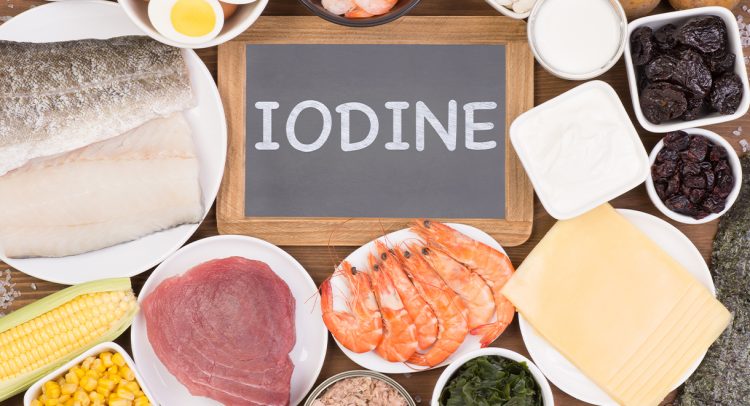
Iodine is such an important nutrient for good health and so many people aren’t getting enough. Your body requires iodine to manufacture thyroid hormones and they are necessary for good energy and achieving a healthy weight. Iodine has other benefits in your body though. Recent research shows it helps reduce the risk of cancer. Unfortunately most of the patients I see are iodine deficient when I test them.
Iodine is especially good at reducing the risk of stomach, breast and prostate cancer, but researchers believe it is effective against other tumors as well, there just haven’t been enough studies yet.
The total amount of iodine in your body is supposed to be between 25 and 50 mg, with 50 to 70 percent of that in places other than your thyroid gland. When you ingest iodine, it gets absorbed through your small intestine and taken to the parts of your body that need it. Most iodine gets excreted in your urine. That means the most reliable test for iodine is a urine test, not a blood test.

Iodine has specific protective effects on breasts and ovaries. Iodine promotes the healthy detoxification of estrogen and also makes breast cells less sensitive to estrogen. Women have a higher requirement for iodine than men. It helps to promote regular ovulation in menstruating women, and in that way supports progesterone production. That makes it one of the most important remedies for estrogen excess and estrogen dominance symptoms like breast pain, fibrocystic breast disease, ovarian cysts, and PMS. I find that supplementing iodine with progesterone cream works wonderfully for these conditions.
Countries such as Japan, with an extremely high iodine intake have much lower rates of prostate cancer than the United States or Australia. Several factors are probably involved, however, the traditional Japanese diet is very high in iodine. It is estimated to be 25 times greater than in the US. The average intake in Japan is 5,280 micrograms per day versus only 209 micrograms in the USA.
There is a large body of evidence to show that iodine is taken up readily by the prostate and affects its overall health. Animal studies have shown that iodine supplementation reduced symptoms of benign prostatic hyperplasia. In humans, iodine reduces cell proliferation and induces apoptosis (cell death) in prostate cancer cells. Men who are iodine deficient are more likely to develop an aggressive form of prostate cancer, with a Gleason score of 8 or higher.
Most of the world’s iodine is found in the oceans; therefore any food that comes from the sea contains iodine. For this reason, fish and other seafood is a good source of iodine, as long as it really does come from the ocean and lives on its traditional diet. Farmed seafood is not a good source of iodine. Seaweed is rich in iodine, but not a lot of people eat it regularly.
Ordinary salt does not contain iodine. Sea salt and Himalayan salt contain very small quantities. If you want to get iodine from salt, you’d have to buy iodised salt. Most people don’t use enough salt for iodised salt to provide anywhere near enough of this vital nutrient.
As you can see, not a lot of foods are a rich source of iodine. Taking an iodine supplement can ensure you’re receiving enough of this critical nutrient.
Breast Health capsules and Thyroid Health capsules both contain 160 micrograms of iodine per capsule.
References
https://pmc.ncbi.nlm.nih.gov/articles/PMC9182735/
https://www.ncbi.nlm.nih.gov/pmc/articles/PMC3883964/
https://pubmed.ncbi.nlm.nih.gov/15239792/
The above statements have not been evaluated by the FDA and are not intended to diagnose, treat or cure any disease.


When you submit your email, you agree to join our mailing list and receive helpful updates, special offers, and product news.